
a bibliomantic q & a

some q & a featuring the books I’ve read since June (bolded=faves):
Q: What will give me an ear worm of a Rolling Stones song, and a weird feeling of nostalgia for a time and place I wasn’t totally a part of?
A: Waiting on a Friend by Natalie Adler
Q: Will I be able to write the speculative memoir as I envision it?
A: Fires in the Night: The Earth Liberation Front, the FBI, and a Secret History of Eco-Sabotage by Matthew Wolfe
Q: How long will grief and mourning have their holds on me?
A: Residual by Tisa Bryant
Q: What’s a good book to read alongside Fires in the Night: The Earth Liberation Front, the FBI, and a Secret History of Eco-Sabotage?
A: Yellow Pine by Claire Vaye Watkins
Q: How often does a river otter cruise by you while you’re doing a reading for an audience?
A: Deluge by Leila Chatti
Q: When’s the last time you had tongue firmly planted in cheek?
A: I Do Everything I’m Told by Megan Fernandes
Q: What kind of erotic haunted party do you want to attend?
A: Bisquick: An American Seance by C. Russell Price
Q: To whom shall we direct our gratitude for helping to revive and encourage zine-making and postage stamps?
A: Pattern-book by Éireann Lorsung
Q: How deep do you want to go? Oh, that deep?
A: Sink by Joseph Earl Thomas
Q: How do poets know?
A: bury it by sam sax
Q: What’s good to read after listening to the podcast Mother Country Radicals?
A: Dangerous, Dirty, Violent, and Young: A Fugitive Family in the Revolutionary Underground by Zayd Ayers Dohrn
Q: How might one treat one’s longstanding frenemy in one’s work?
A: Triage by Claudia Rankine
Q: What gifts, if any, can come of trauma?
A: The Story Game by Shze-Hui Tjoa
Q: Why do you keep the phone number of someone you’ve never called in your phone?
A: Pink Elephant by Rachel Camacho
Q: How can poetry transform heartbreaking data into art?
A: Prayer for Relief by Krystle May Statler
Q: What does a greñuda like to read?
A: peluda by Melissa Lozano-Oliva
Q: How do artists who become mothers attend to their art?
A: Domestirexia by JoAnna Novak
Q: How do you want to leave this place when you’re done living?
A: Scorched Earth: Poems by Tiana Clark
Q: Why not fill the white space?
A: Zirconia…………..Bad Bad by Chelsey Minnis
Q: Who are your queer contemporaries?
A: Buzzkill Clamshell by Amber Dawn
Q: Where do delight and sadness intersect?
A: Let the Moon Wobble by Ally Ang
Q: Why is everyone using whole house astrology now?
A: I Don’t Want To Be Understood by Joshua Jennifer Espinoza
Q: When will you send the poet a copy of your book?
A: The Unswept Room by Sharon Olds
Q: When will we collectively understand that we will all eventually become disabled if we are not already?
A: The Way Disabled People Love Each Other by Leah Lakshmi Piepzna-Samarasinha
Q: Is it really her, peeing in a field?
A: Beginning Middle End by Valeria Luiselli
Q: Why do I often think about the joke in Hacks, when Ava describes the masochistic thrill of being a woman dating men, because you have to basically survive each date?
A: The Simple Art of Killing a Woman by Patrícia Melo
Q: Are we carrying stories and depositing them in documents, notebooks, etc. as much as our instincts ask/urge us to?
A: The Underground Railroad by Colson Whitehead
Q: What answer did you receive, to a question you didn’t know you had, or could not articulate?
A: Mojave Ghost by Forrest Gander
If you’ve read this far: thanks!
My late mother’s birthday is this Friday, September 11th. She would have turned 89. She loved to dance, all her life. Would you spend five minutes this Friday, wherever you are, dancing? xo
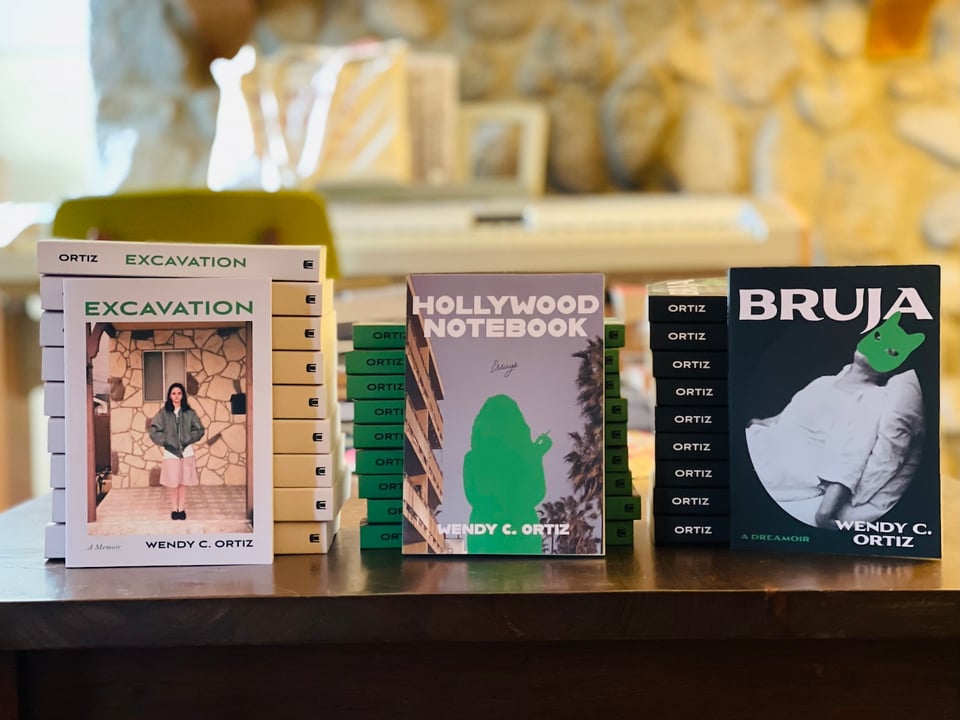
Buy Excavation, Hollywood Notebook, and Bruja from Bookshop.org for a discount, plus support your local independent bookstore at the same time.
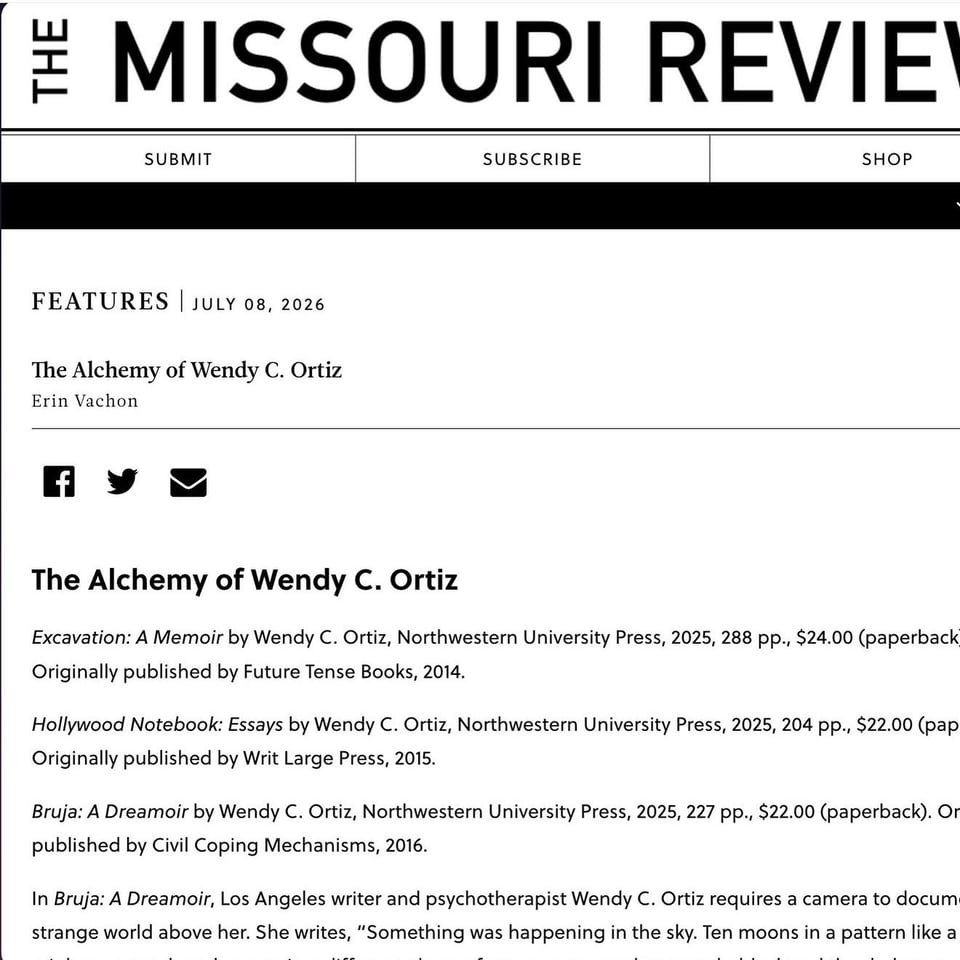
The Summer 2026 issue of The Missouri Review contains a beautiful piece that Erin Vachon wrote about all three of my books, “The Alchemy of Wendy C. Ortiz.” You can read the excerpt at the link, and subscribe to read the whole review.


Add a comment: